
Should Maca Powder Be On Your Grocery List?
June 5, 2016
Is maca powder worth the money?
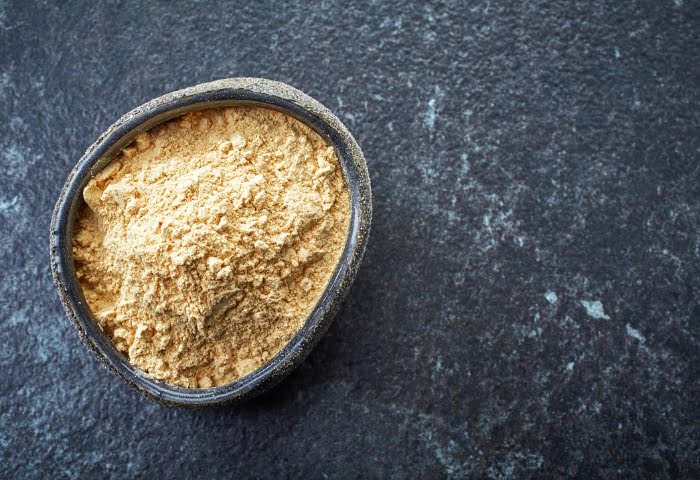
Every now and then I stop by the raw section of my neighborhood supermarket. I am not a rawist (or anything close), but there’s an extra layer of creativity that goes into eating exclusively raw that I find fascinating. Maca powder is one of the raw ingredients that been on my radar for a while so I did a little sleuthing to find out what it is and if there’s any science behind this honey-colored dust.
What is Maca?
Maca is an Andean crop that belongs to the brassica family, along with cabbage, cauliflower, broccoli, and turnips. It’s been cultivated for over 3000 years, looks similar to a turnip, and has a malty, nutty flavor. Maca root can be found as a powder, pill, plant extract, and flour, and has traditionally been used to boost fertility in both animals and humans. Maca is frequently cited as a superfood.
What is Maca Used For?
Maca products are used to remedy sexual dysfunction, increase energy, improve memory and treat depression/anxiety, however many of these benefits are not substantiated by research [1, 2]. Maca powder can be added to milk to make a maca lattes, or used as a mix-in for smoothies, oatmeal, and soups. It can also be roasted and eaten than way, although this is less common in America and Australia.
Maca Powder Nutrition Facts
Maca powder is fairly energy dense with 91 kcal per ounce (roughly 2 tablespoons), most of which comes from carbohydrate. Two tablespoons of maca powder also provides 133% of the daily recommendation for vitamin C, 23% of the recommendation for iron, and 16% of the recommendation for potassium. These nutrients help maintain the immune system, regulate blood pressure, and transport oxygen.
Maca root powder also contains copper, vitamin B6, and manganese, as well as phytoestrogens. Phytoestrogen are believed to weakly mimic the actions of estrogen, and may help alleviate menopausal symptoms.
Is Maca Backed By Science?
Evidence for the health benefits of maca products is limited. Animal models and a handful of (small) human trials indicate that maca preparations may boost sexual desire in men and women, and improve semen count, sperm motility and erectile dysfunction in men, when taken daily [1,2]. However, this research is preliminary and further investigation is needed before maca can be confidently prescribed for sexual dysfunction.
A small pilot study suggests that maca may also be useful for alleviating symptoms experienced by peri-menopausal women such as hot flashes, night sweats, nervousness, and depression. Again, more research is needed before maca can be recommended for menopausal symptoms [3].
If you’re keen to give maca powder a whirl it’s probably not going to hurt you, but it’s too early to dub maca as a nutraceutical. Personally, I think I will save my cash for the moment.
References:
[1] Maca (L. meyenii) for improving sexual function: a systematic review. Shin BC, Lee MS, Yang EJ, Lim HS, Ernst E. BMC Complement Altern Med. 2010 Aug 6;10:44. Review.
[2] Ethnobiology and Ethnopharmacology of Lepidium meyenii (Maca), a Plant from the Peruvian Highlands. Gonzales GF. Evid Based Complement Alternat Med. 2012;2012:193496. Epub 2011 Oct 2.
[3] Therapeutic Effects of Pre-Gelatinized Maca (Lepidium Peruvianum Chacon) used as a Non-Hormonal Alternative to HRT in Perimenopausal Women – Clinical Pilot Study. Meissner HO, Reich-Bilinska H, Mscisz A, Kedzia B. Int J Biomed Sci. 2006 Jun;2(2):143-59.
Does maca have any scientifically backed benefits? Find out what it is, how it’s used and if it actually works in this article.